Swimming: My Drug of Choice
"When we finished with our laps, we hoist ourselves up out of the pool, dripping and refreshed, our equilibrium restored, ready to face another day on land." ―Julie Otsuka, The Swimmers
As I limp away from my workout class this morning, it occurs to me that I have been having this much fun since I was sixteen. Before then, I just roamed the fields, climbed the trees, traversed the high beams of our barn, and played prison dodge with my classmates, ferocious in my desire to survive, to remain free of prison, and continue to punish all those I deemed deserving of my wrath. At sixteen, I tried out for the first girls soccer team in New Jersey and made the cut. During this time, my mother went to teach architecture in Salt Lake City, leaving me alone with my father as my two older sisters were in college.
One good thing resulting from my mother's absence is that she no longer stood at the top of the stairs as I stumbled in the door accusing me of being drunk. Which I was. My father, on the other hand, was not interested in my behavior beyond the act of going to school and making him dinner. Nightly, I rotated between pork chops and roast chicken, while he drank freely without my mother's monitoring.
Despite my consumption of alcohol on any occasion possible, I was fleet and focused, quick to tackle an opponent and ecstatic to be free of my constant fear of men, life, my mother, and failing math. Which I did. Repeatedly.
The summer before, I had been raped on my first date, a secret I carried with shame and rage. Running the length of the soccer field, narrowing my hopes to scoring a goal, brought such relief I became as addicted to endorphins as I was to booze.
In college, finally legal, I alternated between studying for classes I had no business taking as a freshman, smoking weed, drinking, and continuing to find both comfort and clarity in pushing my body with running and dance classes. I would wake up with a blinding hangover, down a coffee, put on my running gear, and hit the road. Although I understood this combination was self-defeating, my need to blank out my feelings meant I would exercise until the only thought I held in my overactive brain was how much I wanted to stop or drink until blackout. Meanwhile, I carried on with perfect grades, a relationship which eventually exploded, and a façade that signaled to many that I was fine.
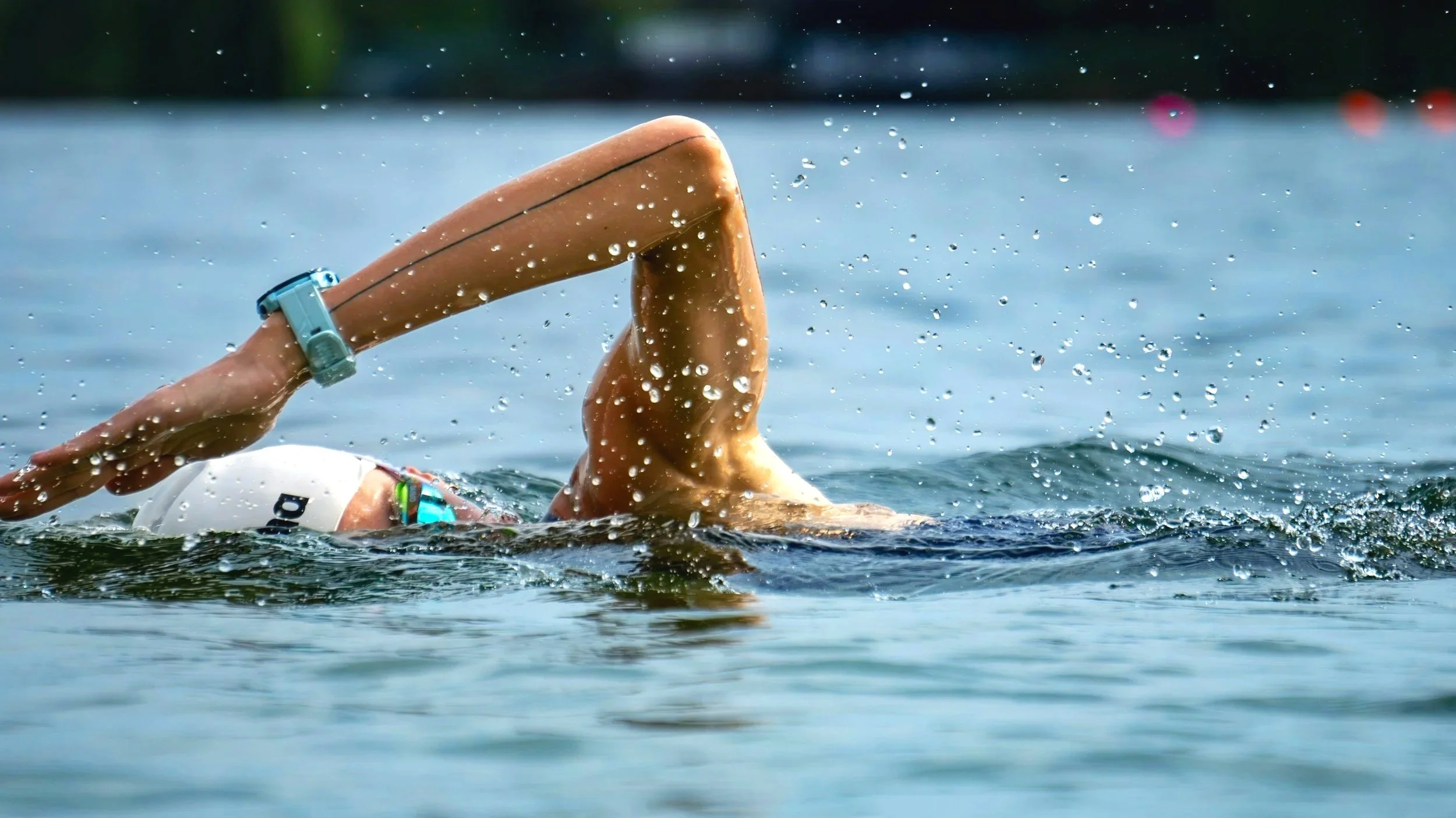
photo by Eugene Chystiakov
I was not fine. But the strength I gained from working out made denial easy. New York City in the 80s was a paradise for those of us determined to participate in death-defying aerobics, to allow ourselves to be belittled and jeered at by a series of mean instructors. In one class, you were told you had to stay on a number taped on the floor, and if you strayed or stumbled, you would be summarily exiled. I lived for the cruelty.
My labor lasted 72 hours. It was back labor; I didn't sleep for several days and gave birth standing up. This was not the plan, but while I was anxious about the health of my baby, I remember that ordeal as something sacred.
Getting sober removed the alcohol, but the desire to eliminate thought was still strong. I ran in Central Park and worked out in classes that left me limp, sweaty, and filled with joy. As it turned out, I was one of those freaks who had little interest in competing with anyone but myself. It didn't matter if I won; I just didn't want to be last. Finishing the Chicago Triathlon with almost no food and a husband who believed it was a good idea for us to ride our bikes the miles to downtown before the race. I had a road bike, barely trained in Lake Michigan, but still, I wasn't last, and I finished.
Fast forward to 2016, I am slated to be a monitor for the Women's March in Washington. Still, a month after Satan's election, I fell down the stairs at my mother's house trying to leave without waking her up. I suffered a pilon fracture resulting in major surgery and an inability to weight-bear for three full months. Needless to say, this was awful, slightly improved by the necessary pain medication.
That injury changed nearly everything. I could no longer take the classes that left me breathless. I started to swim. I had always swum in the ocean, a pond, or sometimes a pool, but that swimming was different from the swimming that is now such a precious part of my life. At first, swimming was a recovery exercise, but the more I swam, the more I understood that this aging body needed something other than punishment. Moving to northern Michigan in the dead of winter with a sad, retired husband accelerated my growth as a swimmer. Leaving our house in the pitch-black morning, sometimes in a blizzard, to enter the gym and emerge in an unbecoming bathing suit, goggles, and a swim cap,
I found joy again in the water. My lane companion at 82, now 84, taught me that age is a gift if you keep moving. At first, a mile seemed a ridiculous goal. I was slow, so slow that when we did our “fast” Fridays that incorporate rest with each lap, I never rested because my pace was such that as I touched the wall, the other swimmers were headed back to the other side. Eventually, a mile was a baseline, although I still can't stomach flip turns, and I am a veteran of the “slow” lane.
Three years of getting up at 5:30, three mornings a week, a swim bag packed in my car, the cat glaring as I refuse to cuddle, has produced friends, nice back muscles, and pride in my body. On summer Sundays, we meet at a local beach to swim in the lake, bringing food to eat after the swim; conversations range from family issues to happy announcements. There is no competition but sisterhood and encouragement. I prefer silence and focus in my swimming life, but in the lane next to mine, the women discuss restaurants and travel plans, always watching the clock and the workout.
We are women, and multitasking mutual support come easily to us. I am a writer. Iris Murdoch, John Cheever, Tennessee Williams, and so many others who wrote, identify swimming as the shining path to inner peace. Let's be honest: most writers need to be switched off like a lamp, but finding what to do without causing permanent health problems can be difficult. Swimming has given me permission to let go and be still.
Molly Moynahan