Gabrielle
“I would recognize you in total darkness, were you mute and I deaf. I would recognize you in another lifetime entirely, in different bodies, different times. And I would love you in all of this, until the very last star in the sky burnt out into oblivion.” ―Madeline Miller
We met at an audition for a play at Trinity College Dublin, where I was spending my junior year. By then, I was no longer planning suicide, which was my first idea. Somehow, I thought it would make things easier for my parents if I killed myself in a foreign country. Okay, I was twenty, and my prefrontal cortex was still undeveloped. Also, I was in a depression so deep I could not imagine any future. At the beginning of the summer, I had broken up with who I believed to be the love of my life, and shortly afterward, my best childhood friend was killed in a car crash. After attending her funeral in a state of chaos, I went back to New Jersey and told my mother I was an alcoholic and wanted to die. Since she was in the middle of slicing up a massive rump roast, she waved the knife at me and said, "No! It's his fault. You are perfect. Go to your room." Instead, I left, found a gig house sitting, minding a depressed dog, and spent several months drifting around in a pool, stoned, crying.
I left for Dublin with a plan to kill myself. Instead, I found a place to live, met my gorgeous history tutor, and attended an audition for a Royal Shakespeare Company play about Sylvia Plath, written and performed by the RSC. The play was being directed by an American living in Ireland, a large, loud, idiot who decided he would seduce me by undermining the other two actresses, one British, one Irish. We bonded over a mutual dislike for him and many, many hot whiskeys consumed at the pub after rehearsals.
Gabrielle was seventeen and had been acting since she was a child. She had played Antigone at the Abbey Theater and had a part in a television show, which was soon canceled for indecency. The other Sylvia, there were three of us, was a very pretty Brit named Miriam. Both women were initially cold toward me, thinking I welcomed the director's attention, but once I made it clear I found him annoying and unattractive, we became friends. Miriam had rooms at Trinity, Gabrielle was taking a bus home to Malahide, where her family lived, and I was riding my bike back to Blackrock, where I shared a house with three Norwegian future doctors.
At the bus stop, we enacted a ritual that was repeated every time: Gabrielle seeking her lost bus pass in a handbag that contained scripts, makeup, apples, a sandwich, a notebook, a hairbrush, several pairs of tights, and possibly a complete change of clothes. The bus pass was always the last thing located with the bus driver fuming while I blocked his departure with my bike.
When she blew her lines or screwed up the blocking, no one thought she had made a mistake because her concentration was so absolute. There was a second, short play added to our bill to make the evening longer, a Tennessee Williams one-act called Something Unspoken. The two of us played faded Southern spinsters, with my character secretly in love with the other one. The second play was barely rehearsed, and Gabrielle never learned her lines completely. She would wander offstage to check the script whenever she was unsure, and I could see her in the wings, looking at her lines, taking a drag off the stage manager's cigarette. After figuring out where we were in the play, she would glide back and say something poignant.
Meanwhile, the audience watched me frozen, waiting for her, and decided I had blown my cue. A few weeks into rehearsal, her television series was abruptly canceled. The head of the Irish League of Decency had complained about the sex in the script and was jeered at by the public until he died of a heart attack, reportedly brought on by a particularly graphic scene. Gabrielle's big break evaporated. By that time, we were in love, I was busy seducing a poor virgin from Cork, and I still didn't know the reason she always went home after our nights out was that her mother was dying of cancer.
As the year wore on, we went out west, crashed parties, occasionally studied, and when I directed a performance of This Property is Condemned. Gabrielle seduced the leading man, spent the night at my house, and when I drove her home the next morning, she discovered her mother had died that night. "Mummy's dead," she said, her face a mask of tragedy, and I drove off in tears, losing the way back to Blackrock.
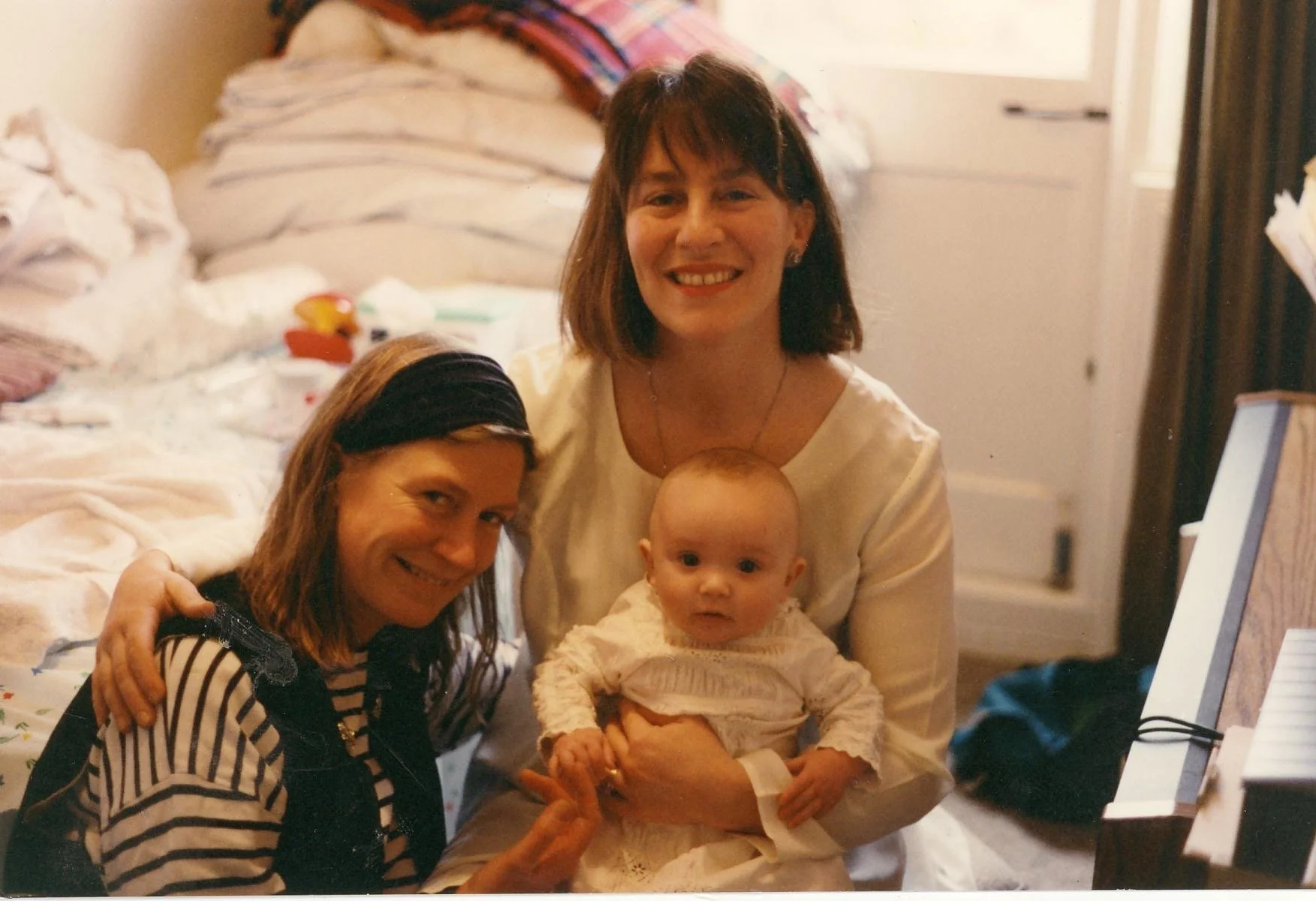
Gabrielle and Molly
As summer approached, I realized I never wanted to return to the United States. Although I still drank, it wasn't the desperate way I had before. Gabrielle's connections in movies and television had resulted in several paying gigs as extras on one huge Hollywood production, where we were cast as prostitutes in The Great Train Robbery. I had a scene with Sean Connery, the fantasy man of my childhood obsession with James Bond, where he admired my teeth. Still, it was all very glamorous, and the money I made enabled me to purchase a Eurail Pass, which would take me from Vienna to Florence, Venice, Corfu, and finally Paris, where I met Gabrielle. We sold copies of the New York Herald Tribune in front of the Jeu de Paume Paris museum until we had enough money to buy a cheap Vietnamese dinner. We were in the final weeks before my departure, and there were many conversations about why I could not return home, where I was so very unhappy. But my parents had no interest in my prolonging my stay in Europe, and I went home.
As the years passed, we went back and forth, including a stint in Berkeley when Gabrielle drove a car for hire with two other Irish girls across the country, and we hung out in California, taking drugs, and generally misbehaving. One night, after ingesting mushrooms with some friends, we spent the entire night on the rug in front of the door. The Irish girls went back, while I stayed in San Francisco until it became clear that I was bottoming out on drugs and alcohol and needed to go home. More years passed, with more visits. She moved to London, met a wonderful man, had a baby, and I stayed sober, got married, and also had a son. She became quite famous in movies and television, while I published several novels. I thought about her often, but life was busy, and we dropped out of touch.
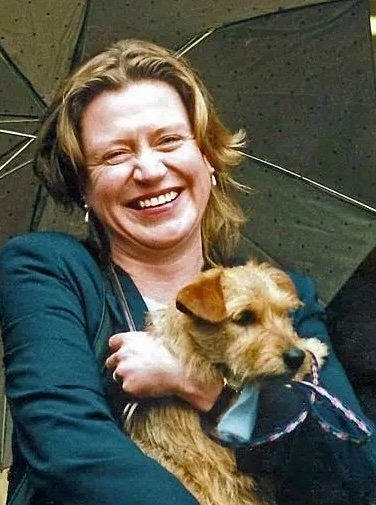
Gabrielle Reidy was known for her intense portrayals of women caught in conflicts. PA:Press Association.
In 2012, I was asked to be part of a press junket to celebrate the installation in London of a massive piece of art sponsored by a steel company based in Luxembourg, The ArcelorMittal Orbit. The trip was all premium hotels and first-class flights, and when I realized I would be staying in the St Pancras London Hotel, I called Gabrielle, and she was able to meet me there. It had been years since we'd seen each other, but we immediately found the same mad rhythm as always, bouncing on the beds in my suite, running through the five-star hotel, and talking about our lives as mothers, wives, and artists.
A year later, I received an email from a mutual friend informing me Gabrielle had been diagnosed with an incurable, fatal brain tumor. She was seeking any cures available, asking wealthy friends to fund dubious medical treatments, but nothing worked. I called her the summer before she died, both of us pretending there was nothing wrong until we stopped, or at least I did, and managed to say goodbye. Gabrielle sounded the same, but she was dying.
The memorial service in Dublin was almost unbearable in its beauty and sadness. Someone had a recording from an old answering machine, with Gabrielle talking about a dinner party, then veering off to another subject entirely, hanging up without providing any details of the invitation. Her sisters were both there, as were so many of the people I had known during my time living in Dublin. We scattered roses off the beach in Malahide, and people got viciously drunk at the pub afterward, except I was still sober, so I drank too much coffee and listened as one of her sisters recalled how we were such good friends and yet could fight like rabid dogs. I told her the story of Gabrielle breastfeeding in front of the Tate, boobs completely revealed, and how I had thrown a scarf over her head, which caused her to shout at me, which caused onlookers to wonder why this awful American was yelling at this lovely Irish mother. I had not felt such heartache since the death of my oldest sister.
I still miss her.
–Molly Moynahan